Home Up Home cultivation Small commercial cult. Commercial Cultivation Précis of Log Inoculation process Shitake on logs Shiitake on sawdust
 

Home
Up


Commercial Cultivation of Exotic Mushrooms

Mushrooms are cultivated and consumed worldwide for both culinary and medicinal purposes.  The commercial potential of an edible species for any grower depends on a number of factors including edibility and shelf life, local and regional culinary customs, the existence of a distribution network, among others. Some edible species are cultivated and consumed internationally while other edibles have not yet achieved worldwide culinary appeal and are therefore cultivated only in countries where a local market has developed. There are a few species that are cultivated strictly for their medicinal properties while a few are cultivated because they are good edibles and also have medicinal properties. The following species are currently cultivated on a commercial scale for specific marketing areas. 

Common name (Latin name)                                            Main cultivation area

Edible Species:

White or Brown Button mushroom (Agaricus spp.)              Worldwide

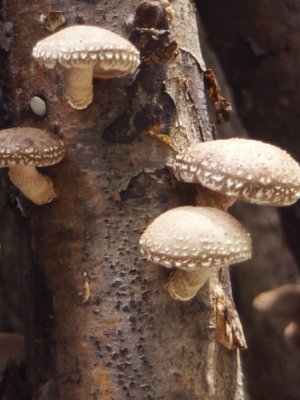
Shiitake (Lentinula edodes)                                                  Worldwide

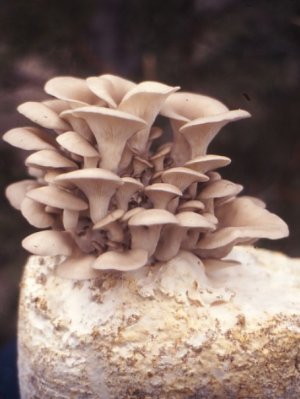
Oyster or Abalone (Pleurotus ostreatus)                                Worldwide

Paddy Straw (Volvaria volvacea)                                            Asia

Enokitake (Flammulina velutipes)                     Japan, Taiwan, China, N. America

Maitake (Grifola frondosa)                                            Japan, North America

Nameko (Pholiota nameko)                                                    Japan

Wine-red Stropharia (Stropharia rugoso-annulata)                   Europe

Blewit mushroom (Lepista nuda)                                             Europe

Shiimeji (Lyophyllum descastes)                                             Japan, N. America 

Kuritake (Naemataloma sublaterium))                                       Japan

Kukirage or Wood-ear fungus (Auricula auricularia)                 Asia 

White Jelly fungus (Tremella fugiformis)                                    China

Medicinal Species:

Reishi or Ling Zhi (Ganoderma lucidum)                           China, Japan, Korea

Caterpillar Fungus (Cordyceps sinense)                                        China 

Mycological Information

Mushrooms are the reproductive bodies formed by certain fungi. Just like the apple on a tree, mushrooms are the "fruits" of these fungi. The actual organism that produces the mushrooms is called MYCELIUM,  a strand like mass of white cells found in the growing substrate which may be a dead tree stump, a live tree, or organic material in the soil.

Fungi reproduction depends on the existence of specific environmental conditions, especially the moisture or humidity level, the temperature, and the availability of nutrients. Optimum conditions vary among species.  Under the right conditions “fruiting” occurs and the mycelium produces mushrooms.  When mature, the mushrooms release millions of spores into the environment for further propagation of the species.

 Mushrooms are classified into three types according to their growing characteristics. 

Parasitic mushrooms attack a living host plant, usually a tree, and eventually kill it. They may also be found growing on dead trees, but they probably started growing while the tree was alive and contributed to its demise.  An example of a parasitic mushroom is the  Honey mushroom (Armillaria mellea).This type of mushroom can be cultivated but will require a living host. Some parasitic mushrooms also function as saprophytes (described below).

Mycorrhizal mushrooms form a symbiotic (mutually beneficial) relationship with the roots of trees or bushes. In fact, the root tips of all plants are coated with a fungus which breaks down the organic matter in the soil and makes it available to the plant. The plant in turn produces sugars and exchanges these with the fungus. Some of these symbiotic fungi produce mushrooms.  Examples include the Boletes, Truffles, Chanterelles, and Amanitas. Cultivation of this type of mushroom requires the other half of the symbiotic relationship which is the live tree. It is almost impossible to establish this symbiotic relationship under controlled conditions on a commercial basis. However, success has been achieved with truffles whereby a grower inoculated the roots of small oaks with the mycelium, planted them, and then waited for more than ten years before harvesting the truffles.

Saprophytic mushrooms live on dead organic matter such as dead trees, stumps, old roots, grass, straw, compost, etc. Mushrooms in this group are those that are successfully cultivated including Shiitake, Oyster, Champignons or White Button mushrooms (Agaricus spp.), Portobello,  Enokitake, Reishi, Maitake, Paddy Straw mushroom, and many others. 

All of these types of mushrooms play roles in ecosystems throughout the world. One of the key roles that mushrooms play in natural systems is the decomposition of dead organic matter. Decomposition is accomplished by a succession of saprophytic fungi (the following examples are edible species but I am sure there are many other). The primary decomposers such as Shiitake, Oyster, and Wine Cap mushroom (Stropharia rugoso-annulata), start the process by breaking down the lignin and cellulose in wood, straw and other plant matter.  Secondary decomposers take over after the substrate has been partially broken down. Secondary decomposers typically grow on compost and include the White Button mushrooms and Portobello (Agaricus spp.).  Tertiary decomposers are typically soil dwellers existing in reduced substrates.  These include some Agaricus species, the Orange Peel mushroom, Conocybe, Agrocybe, and Pluteus.

Each mushroom has specific growing parameters (light, moisture, temperature) which must be fulfilled for successful cultivation and these precise conditions can be quite difficult to reproduce.  For example, the growth stimuli that morels require for reproduction are so complex that cultivating them indoors in controlled conditions is a hit or miss procedure at best. They can be cultivated outdoors by preparing a site suitable to their growth and  introducing the morel mycelium in form of spawn (mycelial culture grown out on grain or sawdust). On the other hand, Oyster, Shiitake, Shaggy Manes and others depend on a less complicated interplay of stimuli in order to reproduce and have an almost 100% success rate if instructions for cultivation are followed carefully.

Many of the above-mentioned mushrooms are edible and some can be easily cultivated using the techniques described below. Primary and secondary decomposers are the most suitable for cultivation since the mycelium of these species is usually quite vigorous and with proper techniques there is a high rate of success. In addition, substrates are readily available. The by-products from agricultural processes and the lumber industry are suitable substrates for mushroom cultivation and include hardwood logs for outdoor Shiitake cultivation, sawdust for indoor cultivation of many species, and grain straw for Oyster cultivation. 

Cultivation Techniques

Many  mushrooms species can be cultivated at home on a small scale using various methods.   Since home cultivation is mainly a hobby, the expectations of the grower and the results of cultivation can vary widely.  However,  the experimentation alone can lead to a satisfactory experience. 

Commercial cultivation, on the other hand, requires reproducible, quantitative results. A steady supply of mushrooms is necessary in order to enable the commercial grower to satisfy the demands of  potential customers such as food distributors, supermarkets and restaurants. Since commercial cultivation usually involves a substantial investment, the cultivation techniques must be dependable with consistent results so that a marketing strategy can be formulated and a reasonable return on the investment realized. Successful commercial cultivation techniques have been determined for a number of edible and medicinal mushroom species which have a high potential for commercial production.

These techniques fall into three categories: 

·     Indoor cultivation on sawdust, straw, compost, or other suitable substrates

·     Outdoor cultivation on hardwood logs

·     Outdoor cultivation in beds of straw, wood chips or other suitable materials

Indoor Cultivation

Many mushroom species are cultivated indoors in climate-controlled buildings. Certain species require adherence to strict parameters for successful cultivation, others are more forgiving. The buildings necessary for indoor cultivation can therefore vary in sophistication and cost depending on the species of mushroom that is cultivated. Substantial investment will likely be required for cultivation of sensitive species such as Maitake or Enoki, where temperature control and humidity are critical. Others, such as Oysters, can prosper in insulated greenhouses with less sophisticated controls.

Indoor tray cultivation

The Agaricus species, which includes the common White Button mushroom, is the most widely cultivated species of  mushroom using this technique. There are two commonly-cultivated species --  Agaricus bisporus and Agaricus bitorquis. There are also various strains of these species which exhibit different characteristics such as the colour range which varies  from pure white to light brown.  The substrate for this species normally consists of animal manners and cereal straw which have been well composted, meaning that high temperatures were achieved during the composting process. The elevated temperature is necessary in order to kill the many fungal competitors present in the original substrates. The compost is then placed in long trays in a climate-controlled building and inoculated with spawn of the desired strain. The trays are kept in the dark  while the mycelium from the spawn runs through the compost. At the appropriate stage the substrate is “cased”, which means covered to a depth of about 3 to 5 cm with casing soil that is in general a mix of peat moss and limestone. The casing protects the colonized substrate from drying out and provides a stimulus for the mushrooms to form. After approximately two weeks of casing, the mushrooms start forming and are picked continuously until the nutrients in the compost are used up. These mushrooms have been traditionally picked at a fairly young stage, hence the name “button”.

A recent development in North America has been to allow these mushrooms to fully develop to maturity. At this stage they may reach 3 to 6 inches across the cap. They are sold as Portobello or Portabella mushrooms, and have become very popular.

Tray cultivation has been used with varying degrees of success for the production of Oyster and Shiitake mushrooms using pasteurized straw and sawdust respectively. Paddy Straw mushrooms are also produced on trays in temperate zones, whereas they are normally cultivated in outdoor beds in tropical climates.

Indoor bag or bottle cultivation

Bag cultivation is used worldwide to grow Shiitake, Oyster, Shiimeji, and Maitake. Substrates suitable for this method range from hardwood sawdust, aged softwood sawdust, wood chips, cereal grain straw, corn cobs, various types of hay, and sugar cane bagasse to name a few. The above materials are supplemented for nitrogen with such ingredients as bran from rice, wheat, spelt and other grains, cornmeal, cottonseed meal and many more at a ratio of approximately 1 to 4. Other additives may include sugar, molasses, gypsum, limestone etc. 

The ingredients are mixed together dry, then water is added to obtain a 60 to 70% moisture content level. The wet mix is then bagged in autoclavable bags such as high density polypropylene or polyethylene. The bags are then sterilized by steam in an autoclave or retort for 1 to 4 hours at 15 pounds per square inch (psi) or 1.1 kg/cm2.   Alternatively, atmospheric pressure steam sterilization can be done for 12 to 18 hours. This has the effect of destroying competitor fungi or bacteria which may be present in the substrate. However, for certain species such as the Oyster mushroom, pasteurization rather than sterilization of the substrate is sufficient since this particular mycelium can tolerate or even benefit from some bacterial action.

Following sterilization protocols, the bags are inoculated with the “spawn” (mycelial culture grown out on grain or sawdust) of the desired species in a very clean or sterile environment. The bags are sealed but some form of gas exchange must be provided, either via a breathable patch on a specially-made bag or simply by closing the bag around  a wad of cotton. The mycelium will run through the substrate in a few weeks, binding the mix together into a solid block. The bags are then moved to a grow room which has a high humidity level -- approximately 80 to 90%. 


In order to initiate “fruiting” (mushroom production; also referred to as “flushing”), the plastic bag  is removed for Shiitake or simply perforated for Oyster mushrooms. Within a few days the mushrooms begin to form on the blocks, or through the holes in the bag. The mushrooms will be ready to pick within days or weeks depending on the species. After picking, the blocks should be left to rest for a period of time after which they can be soaked in water to initiate a second fruiting, or flush. Three to four flushes are possible with Shiitake. Other species may only have one flush. Typically the nutrients in the blocks are used up within a couple of months.  Mushroom yields vary from 30 to 50% of the original weight of the substrate. A variation of this method is  the use of autoclavable bottles instead of bags. This method is used extensively for Enokitake, Shiimeji, and Hiratake mushrooms. Specialized equipment for mixing, filling and inoculating bags or bottles, and for emptying bottles, is available, mainly from Japan.

Many growers who are not prepared to set up sterilization and laboratory facilities can purchase bags or bottles already grown out on substrate and ready to fruit. All they have to do is provide suitable conditions in  growing rooms or outdoor areas and carry out the final stage of the process, which is fruiting and harvesting. There are suppliers of ready-to-fruit bags or bottles in North America, Europe and Asia.

Set-up costs for a cultivation enterprise vary widely depending on factors such as the geographical location (due to the heating and/or cooling of buildings), desired species,  whether a laboratory and sterilization facility is required, availability of ready-to-fruit substrates, and the degree of sophistication of grow-out areas, among others. The first step in setting up a mushroom-growing enterprise is to carry out a survey of the mushroom species that can successfully be marketed in a given geographical region.  This is a must since the species chosen will, to a very great extent, determine the setup that will be required.

Outdoor Natural Log Cultivation

Commercial cultivation on hardwood logs such as Oak, Ironwood, Hickory and others consists of  inoculating  logs from the limb wood of  freshly cut trees (preferably winter cut) with mycelium of the desired mushroom species. Softwood logs are not suitable because of the inhibiting substances in their resin. The best time to cut the trees is just as the leaves finish turning colour. This is the point of highest concentration of sugars and vitamins in the wood. The next best is anytime during freeze-up. The logs should be left in long lengths in the bush until spring, at this point they can be cut in lengths of 3-4 ft. The mycelium is introduced in the form of spawn, a blend of sawdust and nutrients with the mycelial culture growing through it, or wooden dowel plugs which have been impregnated with the mycelium. Suitable size logs vary from 7cm to 20cm in diameter and  from 1m to 1.3 m in length. Oak is the preferred species  for a commercial operation because it gives consistent results. Inoculation involves drilling a series of holes into the logs (average 50 holes per log) and introducing the spawn into the holes The holes are then filled with either dowel plug spawn or sawdust spawn, sawdust spawn works faster than plugs. Plugs can be placed in the holes by hand and tapped in with a hammer, sawdust spawn requires an applicator. The holes are then sealed with molten wax. The wax prevents the spawn from drying out and dying.  A newer method is sawdust plug spawn with a styrofoam backing. The plugs are inserted manually into the pre-drilled holes , no wax is necessary as the styrofoam acts as a vapour an contamination  barrier.  Sophisticated machines that insert the spawn into the pre-drilled holes and seal them with a piece of styrofoam in a single step are available. These machines are expensive but for a large commercial operator who is inoculating thousands of logs, the machines can save on labor costs. 


Following inoculation the logs are stacked outdoors  under a natural or artificial canopy that provides from 65 to 85 % shade. These logs are monitored for moisture content (by weighing pre-selected logs), and  are watered as necessary. The mycelium takes off from the spawn and runs through the logs, starting in the sapwood. Depending on climatic conditions and strains used, mushrooms will start to fruit out on the logs after 6 to 18 months.


When the logs start producing they are stood up in rows between  posts or trees.  This arrangement facilitates picking and keeps the mushrooms away from dirt and insects. The logs will  produce mushrooms for an average of five years without further inoculation, as long as the mycelium is kept alive. A consistent mushroom production schedule is achieved by watering or soaking the logs in tanks. The water stimulates the mycelium in the log to fruit, producing mushrooms a few weeks later. The logs are then allowed to rest for 6 to 8 weeks and the soaking is repeated. A daily watering schedule will eventually produce a consistent flushing of mushrooms. A dependable delivery schedule can then be set up for marketing.  Log Management

More recent developments in log cultivation techniques make use of shaded greenhouses to house the logs. Humidity can be controlled much better, inoculations can start sooner, and fruiting seasons can be extended.

The methods described above is used for Shiitake cultivation worldwide where a consistent supply of Oak logs is available. Outdoor and indoor cultivation make Shiitake the second most cultivated species after the White Button mushroom in terms of quantity of mushrooms produced. Outdoor cultivation is dependable, with a 90% success rates for logs.  A top-quality product is produced from this method, which,  if not sold fresh, can be dried to top grade dried mushrooms. The same technique can be used for Wood-ear, Nameko, Kuritake, Tremella,  Maitake, and Reishi. Variations in log management include partially burying the logs in the ground in the bush or under artificial shade and having the mushrooms pop up from the ground. This is done for Nameko and Reishi.

Depending on your location and availability of logs outdoor cultivation can be the method requiring the least investment for startup. If  a woodlot is available as a growing area, no artificial shade is required. If you can cut your own logs a major cost is eliminated. Typical startup costs for a Shiitake mushroom operation in Southern Ontario for a person who has the woodlot but must purchase Oak logs are as follows:

·     logs at CDN$ 150.00 per bush cord plus delivery translates to approximately $ 2.00 per log;

·    spawn at $ 1.00 to $ 3.00 per log, depending on quantity

·     drills and drill bits can add  $ .50 - $ 1.00 per log;

·     labor costs for inoculation - $ 1.00 per log;

·     The total is approximately $ 5.00 to $7.00 per inoculated log.

The lifespan of a log (with a single inoculation) averages 5 years. With proper management the mushroom production can be at least  ½ kg. per log per year. If you use shaded polyhouses and "force" the logs you can get up to 4 lbs. per log per year but for a shorter lifespan. In total you can expect approx. 3 kgs. or 6 - 8 lbs. from each log.

Outdoor Sawdust Substrate 'Log' Cultivation

A variation on the natural log cultivation method is the use of logs made up from substrates such as those described in the indoor bag cultivation section. This technique is used extensively in China for the production of Shiitake mushrooms. Once the blocks have been fully colonized with mycelium and have matured, they are placed outdoor in partially buried grow houses and fruited. This technique is only suitable for certain areas with the right climatic conditions such as high humidity and temperature.

Outdoor Bed or Mound Cultivation

This method is suitable for species that require an outdoor stimulus to produce mushrooms and involves the preparation of outdoor trenches or mounds located in a shady area. Substrates such as wetted straw, sawdust, wood chips and compost are used. The substrates are sequentially layered in the trenches or mounds with spawn added between layers. A final layer of soil is placed on top. These beds or mounds are then thoroughly watered and are then covered with cardboard or plastic until the mycelium has run through the substrate. At this point the cover is removed and mushrooms will start to come out. Species that are cultivated using this method include Paddy Straw mushrooms in warm Southeast Asian countries and Blewit and Stropharia in Europe.

Marketing

Thorough research into the markets available for your product is a must before any investments are made. Marketing requires the investigation and consideration of a number of factors which will likely be peculiar to any geographic location. The sale of the fresh mushrooms locally is the most desired venue as processing and delivery costs can be kept to a minimum. Potential customers include food distributors who supply restaurants, wholesale vegetable distributors at local wholesale food terminals, supermarket chains, restaurants, gourmet food retailers, and farmer’s markets. If you are considering a large operation, distributors and chains are your best bet as they already have a distribution network set up. Careful attention must be given to pricing and profit margins.  The price structure for sales to a distributor or large chain would be lower than for direct sales to restaurants or retailers, but the volume would likely be higher.  These kinds of marketing decisions will impact both profitability as well as the level of production required (i.e., labor costs will be higher). For smaller operations, establishing a relationship directly with some upscale restaurants and retailers or attending farmer’s markets may prove successful. Your personal attention to these groups will be rewarded with a higher price for your mushrooms. 

Markets for a quality fresh product may be found in wholesale food distribution centers of major cities. Demand for exotic mushrooms is usually higher in larger urbanized areas with access to a market that is willing to pay the extra costs for high quality mushrooms. As of 2008 farmers markets are becoming popular due to the "shop local" movement and may provide opportunities to market directly to customers and realize full retail price. Adding mushrooms to a current line of market products will enhance your bottom line.

A number of mushrooms can be marketed in a dried, pre-packaged format.  Shiitake is one such mushroom.  Large quantities of dried Shiitake are brokered through Japan which is one of the largest producers, importers and exporters of dried Shiitake in the world. Their grading system is very strict and access to this market is extremely difficult. Local markets for dried mushrooms are likely to prove more successful. A potential vast market is in the production of value-added products using dried mushrooms. Attending food trade fairs can be useful in determining which products to produce and for contacting potential customers.

Government agencies may be available to provide assistance in promoting your product. Contact your state or provincial department or ministry of agriculture as well as government economic development agencies.

Steps to Commercial Cultivation

Anyone seriously considering setting up a mushroom-growing enterprise should research a number of areas before making decisions and/or investments: 

·     Investigate markets and distribution networks. Check the competition and prices for the products at the  wholesale and retail levels.

·     Cultivation techniques must be researched in depth. Pay careful attention to timelines.  A number of excellent books that describe these processes in detail are listed in our catalogue. 

·     Decide on which species to grow that can be marketed successfully. 

·     Investigate sources and costs of the raw materials necessary for the species desired.

 ·     Financial considerations: Assess costs of  facilities, labour and general operating costs. Correlate price structure to anticipated production levels in order to determine return on investment.

·     Consult expert opinion if available and request help from sources such as government agencies.

Fun Guy Farm is a supplier to commercial growers and hobby growers. We supply: books to assist your research needs; grain spawn of various species for inoculating bags, bottles, or outdoor “beds” of substrate; sawdust spawn, and sawdust plug spawn of various species for log inoculation. We also produce ready-to-fruit bag culture sawdust blocks as kits for home cultivation.  For commercial growers we supply, on a contract basis, large quantities of spawn, ready-to-fruit substrates, and inoculated logs. We also supply equipment such as drills and bits, and can broker large specialized equipment purchases (such as dryers, slicers, mixers, bag and bottle filling machines etc.). We can also provide consulting services tailored to the individual needs of prospective commercial growers on a fee basis.  In particular, we offer consulting for the design of cultivation facilities, selection of the most suitable mushroom strains, and training of personnel at our facility. Our expertise can help to avoid costly mistakes in setting up a commercial production enterprise.


For More Information Contact:

Mycosource Inc.
R.R. 1, Goodwood ON, Canada L0C 1A0
Tel: 416-402-9755
FAX: 416-963-5520
Internet: office@mycosource.com